




















Massage Gun or Hands-On Massage? Deciding During a Session
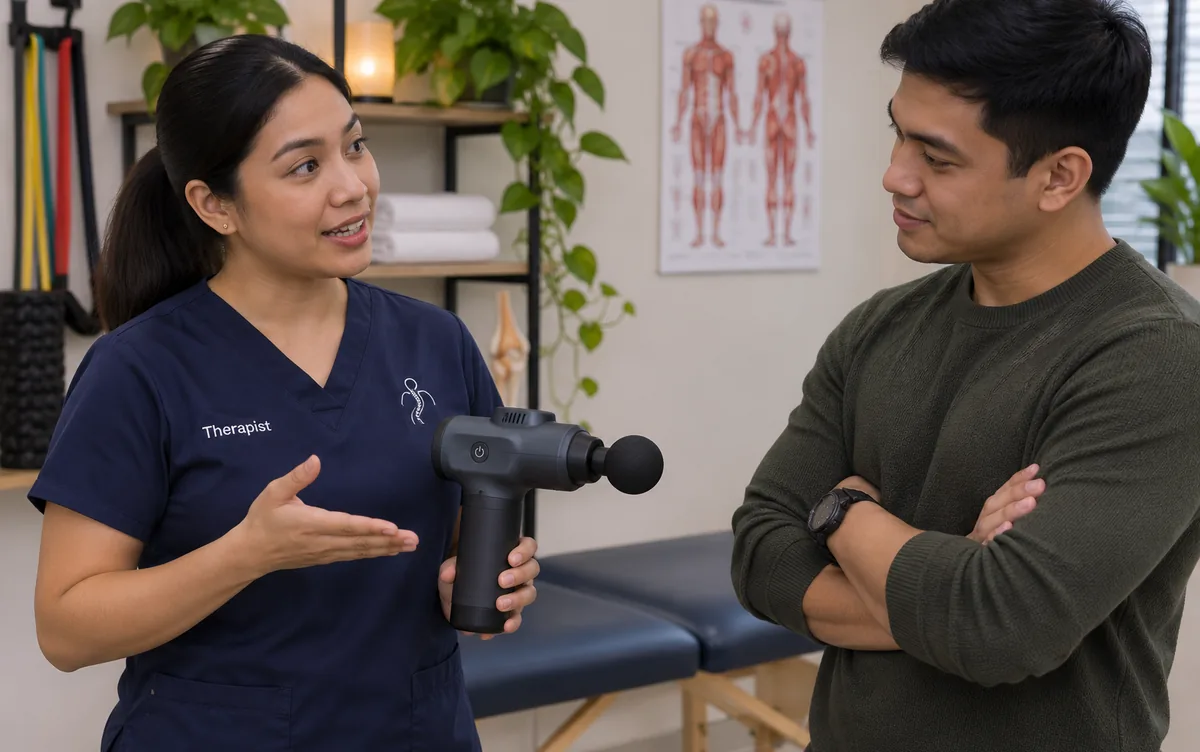
Sometimes a therapist opens a drawer halfway through a session and brings out a percussion device. Before it touches you, you can ask to see it, hear it, learn what it would replace, and decide whether you want it used. A massage gun makes repeated mechanical contact. That experience is different from the pressure, movement, and feedback of a practitioner’s hands.
Find out what the device adds to your booking
Ask which area the therapist proposes, why they suggest the device, and how much of the appointment it would occupy. A few minutes as an optional step differs from a service advertised primarily as percussion massage. If you booked for quiet hands-on work, say so. Ask whether the original appointment can continue as planned.
The device sound alone can influence your choice. You can ask staff to switch it on away from you before deciding about contact, provided others in the room agree. There’s no obligation to try it on your body just because you agreed to hear it. Spakol.net’s guide to checking massage add-ons can help you ask about price and time before the service changes.
Discuss suitability and who is operating it
A device has settings and attachments, but a list of settings says little about whether it belongs in your session. Ask about the practitioner’s training and how they assess suitability. Cleveland Clinic’s guide to percussion massage devices describes considerations and cautions. For a medical condition, injury, surgery, or uncertainty about risk, check with your healthcare professional.
A massage gun is optional equipment, never a reason to push through pain or use treatment over an unexplained problem. If something feels wrong, ask for it to stop. A hands-only session, a change of area, or ending the appointment can all be reasonable choices depending on the circumstances.
Make your decision easy to carry through
Use words that describe permission and scope. “I’m happy to hear it switched on, but please wait for my answer before using it” and “No equipment today, please” communicate different decisions. The therapist should be able to follow either. If the room is noisy or you can’t easily see each other, agree on a clear stop signal before any trial.
When returning, describe what you liked about the appointment. “I preferred the quiet shoulder work with hands only” gives the next therapist useful information and avoids assumptions about your tolerance for vibration. Questions about massage training and qualifications can guide a more detailed conversation with a provider advertising a device-led service.
What two offers can look like in practice
A client booked quiet manual shoulder work and is offered a powered percussion device as an additional feature at the studio. The deciding priority here is understanding the proposed sound, contact, and change to the original service.
| Possible arrangement | What the offer includes |
|---|---|
| First option | One therapist can keep the appointment entirely manual at the agreed price and duration. |
| Second option | Another can demonstrate the device away from the body and explain the proposed area before the client decides. |
Before choosing, find out whether this addition actually serves the reason the client chose the appointment. A person who values quiet may already have the information needed to decline. Someone curious about the sound can hear it without giving permission for contact.
Separate the equipment demonstration from consent to treatment
A practitioner may want to show you the size of the device or change an attachment so you can see what they are describing. Decide whether you are comfortable with that demonstration while the device is switched off or held away from your body. If you are, give permission only for that part. A person can reasonably listen to the motor and then decide that the sound alone makes the service unappealing.
Ask what the therapist would normally be doing with their hands during the same minutes. Replacing manual shoulder work with device contact is a real change to an appointment, even if the advertised price stays the same. The answer can help you decide whether you value the addition or would prefer the session you originally selected.
Consider what an appointment can tell you about a product claim
A display card may describe a motor speed, battery life, or particular attachment. Those details describe equipment. They don’t establish that its use is appropriate for an injury or that stronger contact would be better for you. Bring any relevant medical question to a healthcare professional, and keep the discussion at the studio focused on the actual proposed service.
If you do elect to try an appropriate brief use, report the immediate experience in clear terms. Saying that a sound is unpleasant, contact feels too strong, or you prefer ordinary hands-on work is enough to stop. You do not owe the device or its operator a longer trial to justify your judgment.
Compare a device demonstration with a complete service
A massage gun in a display case can attract attention even when it contributes little to the appointment you set out to book. Ask yourself which part of the demonstration you are curious about. Hearing the motor is one decision. Seeing the attachment while it is switched off is another. Having the practitioner use it on a particular area for a particular purpose is a third. You can stop after whichever part gives you the information you wanted.
Consider a client who booked a short manual appointment after several hours of noisy work. A device demonstration may be interesting at the desk, but the same sound near the treatment table may be the opposite of what the client hoped to enjoy. A person who specifically wants to discuss percussive techniques might feel differently and want a practitioner with relevant training. Those are equally specific booking goals.
- Ask whether the device is an alternative to manual work, an included segment, or a separately priced service.
- Ask what the practitioner does if the noise, vibration, or contact is uncomfortable.
- Confirm the original hands-only plan if you choose to decline the equipment.
When the answer is uncertain, return to the reason you made the appointment. A piece of equipment does not need a trial simply because a provider owns it. A clear explanation, a genuine choice, and the ability to stop matter more to your experience than the number of settings listed on the machine.
Who can explain and authorize the change?
The menu tells you whether a device has a listed price, but it cannot explain the contact proposed for you in that moment. If the answer affects the total, ask for a clear comparison of the two massage prices. Then let the practitioner explain the service change before deciding whether to authorize it.
| Who to ask | What they can establish |
|---|---|
| The desk | Whether percussive work is included, optional, separately priced, or central to the service. |
| The practitioner offering the tool | Why it is proposed, what contact would replace, and what training informs its use. |
| The client | Whether they want to hear it, consider contact, or keep the appointment manual. |
Give separate answers to separate decisions. You can hear an explanation, be shown equipment, or look at a position without also accepting the proposed contact. If the practitioner offers an alternative, hear its details before treating it as the same appointment with a different name. A demonstration and an agreement to use a tool should be easy to tell apart in any booking note.
Practical decisions, from arrival to departure
Trying the sound alone
You are curious about the device but aren’t sure how you feel about a repetitive vibration noise close to your body. Hearing a demonstration is a smaller decision than agreeing to a trial on your body.
Can you switch it on away from me first and wait for my decision about contact?
Give a separate answer about contact after hearing the device and keep hands-only work available.
An unexpected upgrade
You booked manual shoulder work, and a device is presented as a premium upgrade once the session is underway. The cost and time need to be clear before you can decide whether an addition has value for you.
What would this replace, how much time would it take, and would it change the price?
Continue with the original booking unless you actually choose the new scope and total.
A stop cue that can be heard
The demonstration is loud enough that you can’t tell whether your soft voice carries across the table. A signal only works if the practitioner can notice it in the position you will actually occupy.
What signal will you be able to see immediately if I want the device stopped?
Test the signal without contact and choose the manual option if communication remains difficult.
An attachment with a technical name
You are offered several attachment names without an explanation of what the proposed contact would feel like. Recognizing a product name isn’t the same as understanding the proposed change to a massage.
Could you describe the contact in ordinary words and tell me why it is being offered here?
Ask the practitioner about their experience with the equipment and leave the device out if you remain uncertain.
What a useful explanation of a massage gun includes
Separate what is currently confirmed from what someone expects will probably be available. That distinction matters when a decision affects the rest of the day.
A useful first reply
It is optional, and I can show you its sound without contact before you decide about the suggested area.
This gives you a basis for a decision because hearing a demonstration and consenting to use have been handled as separate decisions.
When the reply is too broad
“It is a professional device and everyone finds it effective.” The statement may be reassuring, but it leaves part of the arrangement open. You can ask directly for the information you need.
What would the device actually replace in my session and can I keep the original manual service?
If the answer depends on availability
Our percussive service has a separate price, while a hands-only booking is still available at the original rate.
In this situation, have the service and price confirmed before authorizing any addition. Ask for the part that is confirmed now and the part that someone will still need to check.
A short message to start with
I booked hands-on massage. If you suggest a device, please tell me what it would replace and let me decide before you use it on me.
For this request, a useful confirmation identifies whether the service remains hands-only and the price and time of any approved addition.
What to save for a return visit
Note whether you want manual work throughout or only agreed equipment on a clearly named area. For your own reference, you could adapt a note like this.
I chose hands-only shoulder massage after hearing the device. Please do not include equipment automatically if I book the same service name again.
When you next hear the same device name, remember what you actually chose at the previous visit. Enjoying manual shoulder work after hearing the motor does not oblige you to try the device later. Equally, a past trial does not decide which area, timing, or equipment you want today.
Frequently Asked Questions
Is a massage gun the same as a vibrating massage chair?
No. One is a handheld percussion device, while a chair has its own contact points, controls, and seating arrangement. Ask which equipment the venue means.
May I ask how a removable attachment is cleaned?
Yes. Ask how staff clean the head between clients and whether a fresh attachment or covering is used where appropriate.
Can I bring a gift card for a hands-only appointment?
Check whether the gift card covers a named service or a monetary amount. Confirm your hands-only preference before redeeming it.
Is buying the device after an appointment expected?
No purchase is inherent in receiving a massage. If the studio sells equipment, you can decline or take product information away to consider.
Can a home visit go ahead without an electrical outlet?
Ask the provider whether the particular equipment requires power and whether a manual service is available. Confirm the actual setup for the visit.

Try These Massage Packages
HOME + HOTEL SERVICE
(P1,300 + Fare/Transpo)
1 hour and 45 minutes
Whole Body Massage
Body Scrub + Wash
PRIMERO™ Massage Sequence
ALTERRA PACKAGE
(P2,500 + Fare/Transpo)
1 hour + 45 minutes
Whole Body Massage
ALTERRA™ Massage Sequence
Exfoliating Body Scrub + Body Wash
Signature Sensual Massage +
EUFORIA PACKAGE
(P2,750 + Fare/Transpo)
2 hours
Whole Body Massage
EUFORIA™ Massage Sequence
Exfoliating Body Scrub + Body Wash
Signature Sensual Massage ++
INFERNO PACKAGE
(P3,000 + Fare/Transpo)
2 hours + 15 minutes
Whole Body Massage
INFERNO™ Massage Sequence
Exfoliating Body Scrub + Body Wash
Signature Sensual Massage +++
Lingam or Yoni