




















Couples Massage vs. Four-Hand Massage: Booking for Two Explained
Are you booking two clients, two therapists, or both? That is the most useful question when a spa menu uses terms such as couples massage, twin massage, double massage, or four-hand massage. These labels do not always describe the same arrangement. For Filipino readers planning a shared wellness appointment, confirming the headcount prevents confusion about rooms, prices, and personal preferences.
In common spa usage, couples massage usually means two clients receiving separate sessions at the same time. Four-hand massage usually means two therapists working with one client. However, a particular business may use different wording. Ask for a plain description before paying. This guide focuses on professional, nonsexual wellness appointments and the practical details of booking for one or two people.
Start with a simple headcount
Ask the provider to state the number of clients and therapists covered by the quote. For example, two clients with one therapist each is clearer than a package called twin deluxe. Next, confirm whether the appointments happen simultaneously. Two bookings at the same establishment may be consecutive if there are not enough staff or rooms available.
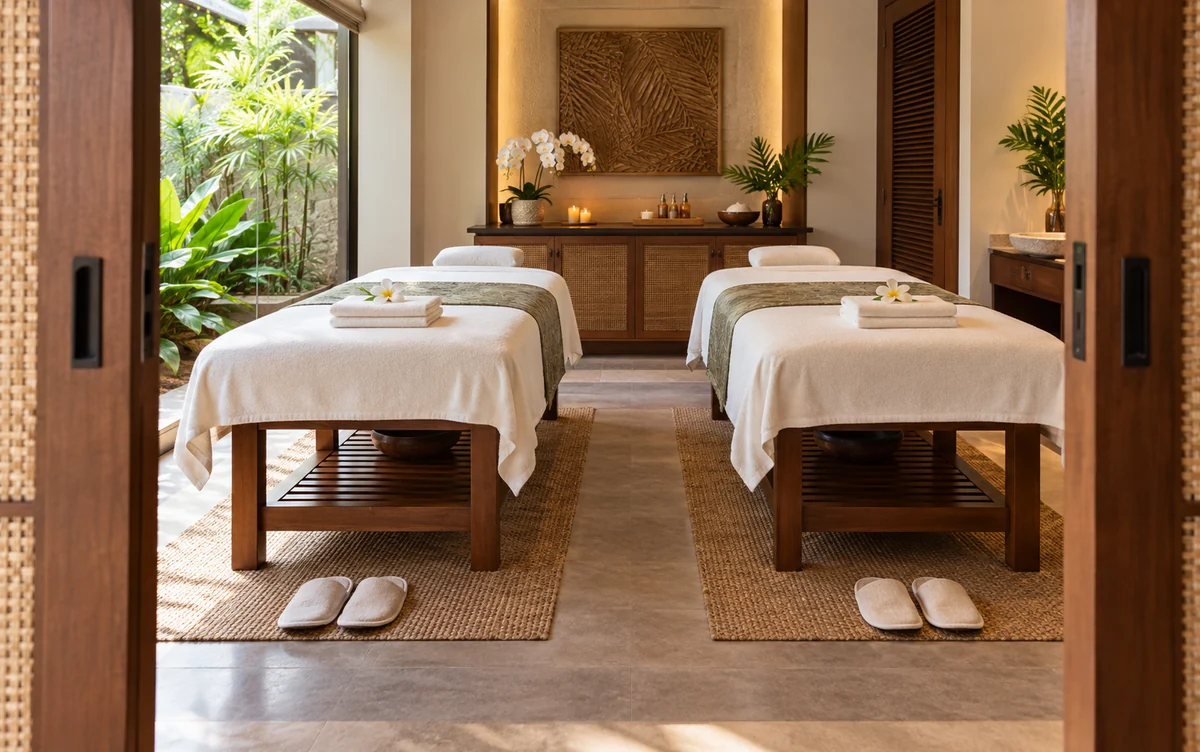
Then ask about the room arrangement. Two clients may share one room with separate tables, use adjoining rooms, or receive treatment in entirely separate spaces. None of these arrangements should be assumed from a promotional photograph. If sharing a room matters, request written confirmation that your specific booking includes it.
Spakol.net's massage etiquette guide can help you think through basic expectations before discussing a shared appointment. Nevertheless, the booking confirmation should contain the details that apply to you. A short message listing clients, therapists, rooms, and start time is more useful than relying on a package title.
Let each client choose independently
A shared booking does not mean both people must choose the same pressure, products, or treatment areas. Ask whether individual preferences can be recorded separately. One person may want a quiet, light-pressure appointment while the other prefers a different professional service. Confirm whether the spa allows that combination within the selected package.
Also, ask whether each client can speak privately during the consultation. People may be comfortable sharing a room while preferring not to discuss personal information in front of a companion. That preference should not be treated as unusual. A practical arrangement might involve separate intake conversations before both clients enter the treatment space.
If you are organizing the booking, avoid answering every question on the other person's behalf. Send them the service details and let them confirm their own choices. This is particularly useful when booking for a parent, friend, or partner who has never visited the establishment. A thoughtful shared experience begins with two informed participants.
Understand what four-hand actually changes
For a one-client, two-therapist appointment, ask how the therapists coordinate the session and how you should communicate adjustments. You should know whom to address if you want to pause, change pressure, or skip an area. The presence of two therapists does not reduce your ability to set boundaries or stop a step you do not want.
Ask whether both therapists remain for the entire advertised duration. A package may have a shared segment followed by a different arrangement, so request the sequence in plain language. Also ask whether the price is per client, per therapist, or for the entire session. Those distinctions can significantly change the total.
Do not choose a two-therapist service simply because it sounds more elaborate. Decide whether the described experience suits your preferences and whether the communication feels manageable. If you prefer a simpler introduction, a standard one-therapist appointment may be easier to understand. An appealing label is less important than knowing what you are buying.
Compare packages without mixing units
Write each option using the same units: number of clients, number of therapists, hands-on minutes per client, room arrangement, and total price in pesos. A package for two people should not be compared directly with a single-client service without acknowledging that difference. Otherwise, a cheaper-looking total may be misleading.
For example, imagine one hypothetical quote for two clients receiving 60 minutes each and another for one client receiving 60 minutes with two therapists. Both arrangements involve two therapists, but they serve different needs. Calculate the cost based on the experience you actually want rather than the number of staff in the room.
Next, identify extras such as facility access, refreshments, product upgrades, or extended time. Ask whether each addition is optional and whether it applies to both clients. A promotion may include one shared benefit while charging separately for individual services. Record the full agreed total and retain the message that explains it.
Plan arrival and room preferences together
Shared appointments require coordination before you reach the spa. Agree on an arrival plan that gives both clients time to complete any necessary intake. If one person is coming from Makati and the other from Quezon City, choose a realistic meeting point and allow flexibility for traffic without assuming a fixed travel time.
Ask what happens if one client arrives late. The business may shorten one session, adjust both start times, or offer another arrangement. Confirm the policy before the day of the appointment so one delay does not create an argument at reception. Also ask whether separate payment is possible if that matters to your group.
Discuss conversation preferences with your companion. Some people enjoy chatting during a shared session; others want quiet. Agreeing beforehand helps avoid an uncomfortable situation in the room. You can also request different room settings when available, but do not assume the spa can provide every preference within a shared space.
Keep each person's consent separate
One client's agreement does not speak for the other. Each person should understand the chosen service and have the opportunity to decline products, techniques, photographs, or additional purchases. A gift, date, or family outing should not create pressure to continue an appointment that someone no longer wants.
Similarly, consent to share a room does not automatically include being photographed or appearing in a social media post. Ask your companion before taking pictures, and follow the establishment's photography rules. Keep staff and other clients out of your images unless they have clearly agreed to appear.
For language that can help you discuss expectations, review the site's etiquette dos and don'ts. During the actual booking, be direct about your own needs. A professional shared appointment should allow both clients to communicate without treating one person as the decision-maker for everything.
Send one clear confirmation message
Before paying, summarize the arrangement: two adult clients, one therapist each, simultaneous 60-minute sessions, separate tables in one room, individual pressure preferences, and the agreed total. Replace those details with your actual choices. Ask the provider to correct anything that does not match its offer.
For a four-hand appointment, change the summary to one client and two therapists, then confirm the sequence and duration. This simple step catches misunderstandings that can survive several casual messages. It also gives you a useful reference if a different receptionist handles the appointment on the day.
Finally, keep service expectations grounded in professionalism and clear communication. Spakol.net's article on qualities of a massage therapist offers another starting point for evaluating the interaction. Choose the arrangement that both the provider and every client can explain comfortably, with no uncertainty about who is receiving what.
Compare three booking arrangements in plain language
Consider three hypothetical offers. The first covers two clients with one therapist each in a shared room. The second covers one client with two therapists throughout the session. The third provides two individual appointments at different times. All three might appear under promotional wording involving “two,” but the practical experiences are different. Ask the provider which arrangement it is actually selling.
For the first offer, the key questions concern simultaneous availability and whether both people are comfortable sharing. For the second, coordination between therapists and your ability to request changes become especially relevant. For the third, the waiting arrangement may decide whether the package suits your plans. Start with the experience each client wants, then compare the offers that meet that requirement.
Use a small booking note with separate entries for client count, therapist count, room count, and duration per client. Add the total payable rather than recording an unexplained promotional price. This format makes a missing detail obvious. It also prevents you from assuming that two tables in a photograph confirm two therapists for the whole appointment.
A practical plan when preferences differ
Suppose two friends want to attend together, but one prefers an individual room and the other likes the idea of a shared space. Do not purchase a shared-room package first and hope the difference disappears. Ask whether separate rooms can be booked for the same start time. If they cannot, decide together whether a different provider or different appointment arrangement would suit both people.
Similarly, one person might want an oil-based service while the other prefers a different professional treatment. Ask whether the package permits separate selections and how that affects the price. There is no need to make both clients choose the same option merely to preserve the appearance of a shared experience. Clear individual choices can make the outing easier to enjoy.
Agree on which decisions the organizer may make. They can usually coordinate a meeting point and relay confirmed schedules. However, each client should answer their own questions about touch, products, and personal comfort. Forward the actual service description rather than reducing it to “everything is arranged.” This gives everyone an opportunity to raise a concern before payment.
Questions specific to a two-therapist session
For four-hand massage, ask how a pause will work if you need to speak. A simple instruction such as asking both therapists to stop while you explain a preference can be easier to follow than speaking over an ongoing sequence. Confirm the communication approach during the consultation. You should not have to remember complicated signals to ask an ordinary question.
Also clarify whether the therapists follow a coordinated sequence or work on separate areas according to an agreed plan. Ask how your excluded areas and pressure preferences will be communicated to both people. Avoid assuming that a discussion with one therapist automatically reaches the other. A brief shared confirmation can prevent conflicting instructions.
If the arrangement changes after you arrive, request a fresh explanation before starting. One therapist beginning while another is expected later is different from the simultaneous session you may have booked. Ask whether the duration, service format, and total remain the same. You can consider the alternative without treating a changed headcount as an insignificant detail.
Keep the shared visit comfortable afterward
Plan the time after the appointment as well as the start. You may finish at different moments if you selected different durations or one person needed a pause. Decide where to meet without rushing either client through changing or payment. A clear meeting point is particularly helpful in larger premises where reception and treatment rooms are on different floors.
Finally, let each person describe their own experience. One client can be pleased while another would choose a different arrangement next time. Separate feedback helps you understand whether the issue concerned room sharing, communication, timing, or the treatment itself. A shared booking is successful when both people retain their own choices throughout the visit.
Your booking headcount
- Write the number of clients separately from the number of therapists.
- Confirm whether the sessions happen at the same time.
- Record the room arrangement for each client.
- Let each person state their own treatment preferences.
- Compare the full package total using the same units.
Frequently Asked Questions
Can two friends use a package called couples massage?
Ask the provider. The label often refers to the booking arrangement, but eligibility and package rules vary. Confirm that both intended clients can use the offer before purchasing it.
Can one person use a voucher for two on separate days?
Only if the voucher permits it. Request written confirmation about splitting the booking, any additional fees, and whether both visits must occur before the same expiration date.
Are matching outfits needed for a shared appointment?
No special matching outfit is necessary. Ask the provider about its clothing and changing arrangements, then choose ordinary comfortable clothing for traveling to and from the venue.
Can I include a personal message with a gift booking?
Ask whether reception can attach a short message to the confirmation or voucher. Keep private details out of shared booking notes unless the recipient has agreed.
Can we bring a celebration cake to reception?
Ask the venue before bringing food. Confirm whether it has an appropriate waiting area and allows outside items. A shared massage package does not automatically include space for a celebration or food storage.

Try These Massage Packages
HOME + HOTEL SERVICE
(P1,300 + Fare/Transpo)
1 hour and 45 minutes
Whole Body Massage
Body Scrub + Wash
PRIMERO™ Massage Sequence
ALTERRA PACKAGE
(P2,500 + Fare/Transpo)
1 hour + 45 minutes
Whole Body Massage
ALTERRA™ Massage Sequence
Exfoliating Body Scrub + Body Wash
Signature Sensual Massage +
EUFORIA PACKAGE
(P2,750 + Fare/Transpo)
2 hours
Whole Body Massage
EUFORIA™ Massage Sequence
Exfoliating Body Scrub + Body Wash
Signature Sensual Massage ++
INFERNO PACKAGE
(P3,000 + Fare/Transpo)
2 hours + 15 minutes
Whole Body Massage
INFERNO™ Massage Sequence
Exfoliating Body Scrub + Body Wash
Signature Sensual Massage +++
Lingam or Yoni