





















Home Service Massage in a Condo: Visitor Rules and Preparation
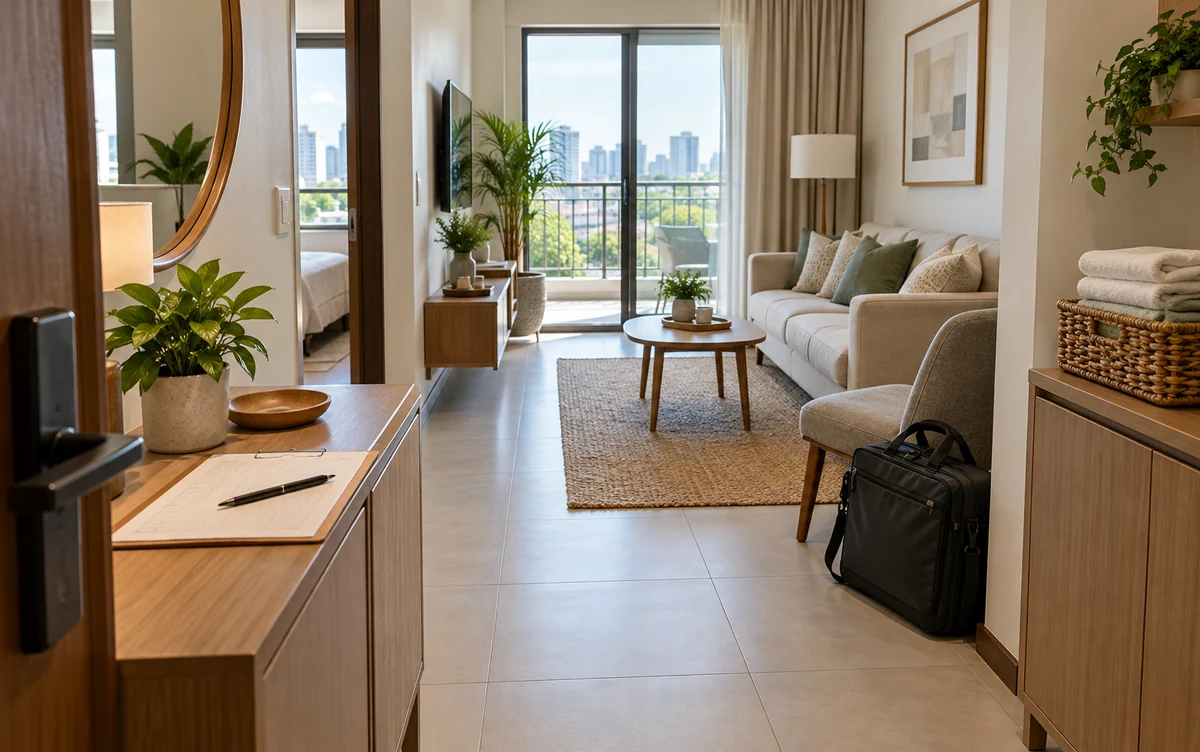
A home service massage in a condominium involves more than choosing a treatment and clearing an hour. The therapist must be able to enter the building, reach the correct unit, and set up in a suitable space. Building administration, security staff, the provider, and the resident may each have different responsibilities.
For Filipino condo residents, the simplest approach is to confirm these arrangements before the appointment day. This guide covers visitor coordination and practical preparation for a professional wellness service. Every building has its own rules, so use the questions here to obtain the actual requirements rather than assuming there is one policy across Metro Manila.
Check the building's current visitor process
Ask your building administration or authorized resident contact whether outside wellness providers are permitted. Then confirm the process for a scheduled visitor carrying equipment. A general guest policy may not answer questions about service personnel, access hours, or equipment brought through a particular entrance.
Find out whether advance registration is required and who can submit it. Some residents can handle the request themselves, while tenants or guests may need an owner or host to coordinate. Obtain the relevant instructions through the building's established channels. Do not rely entirely on what another resident remembers from a previous appointment.
Next, identify the arrival details security actually needs. These might include a visitor name, appointment date, unit reference, or sponsoring resident. Requirements vary. Share the necessary information through the appropriate process and avoid collecting extra identification simply because it seems convenient. The provider should understand what will be requested at the entrance.
Explain access requirements before confirming the service
Tell the provider that the appointment is in a condominium and summarize the building's requirements. Ask whether its staff can comply with the registration, identification, and arrival procedures. This conversation should happen before a therapist travels to the property, especially if the building has restrictions the provider cannot accommodate.
Clarify who will meet the therapist and whether an escort is required. If the resident must come down to the lobby, allow time for that step. Do not assume security can accept equipment, handle payment, or guide the visitor to the unit unless the building has expressly agreed to do so.
Confirm what happens if access is refused because a requirement was not met. Ask how the provider handles waiting, cancellation, or rescheduling in that situation. Clear arrangements help avoid blaming security staff for a policy they are expected to follow. Keep the visitor approval and booking confirmation together for easy reference.
Match the equipment to the space
Ask what the therapist brings and what you must supply. A portable table, floor setup, or other arrangement can require different amounts of room. Request the practical space needs and check the path from the unit entrance to the intended area. Do not assume every provider brings the same equipment.
Measure tight doorways or narrow corners if equipment access is uncertain. Move lightweight obstacles in advance, but do not undertake unsafe lifting just to accommodate an appointment. If the available space cannot support the provider's setup, discuss another arrangement or choose a branch visit instead.
Also check whether the setting offers the privacy you want. A living area may work for one household but feel uncomfortable in another. Tell the provider about the actual arrangement rather than describing a shared space as a private treatment room. Accurate information helps both sides decide whether the appointment is suitable.
Prepare a clear, comfortable working area
Clear enough floor space for the agreed equipment and ordinary movement around it. Put loose cables, breakable objects, and unnecessary furniture out of the way where practical. Keep a clear route to the door. The goal is a usable workspace, not a complete apartment makeover before someone arrives.
Ask about towels, linens, and products before setting anything out. If the provider brings supplies, confirm whether you need a place for its bag and a surface for permitted items. If you must provide anything, have it ready. Avoid improvising a setup after the appointment has already begun.
Discuss temperature and lighting in ordinary terms. You may want enough light for safe movement and a room temperature both parties can work with. Let the therapist know how to request a change. For broader expectations about interacting with the provider, see the site's massage etiquette guide.
Coordinate the household without sharing unnecessary details
Let the people who share your home know that an appointment is scheduled. Agree on which area will be used and what interruptions are likely. This is especially useful in smaller units where a living room serves several purposes. A little coordination can protect everyone's comfort without turning a private booking into a household announcement.
Make a plan for pets, deliveries, and ordinary household noise. Tell the therapist about any relevant practical issue in advance. You do not need to disclose unrelated information about other residents. Explain what affects the session, such as a pet needing separation or a shared entrance that must remain accessible.
Avoid making the therapist responsible for childcare, household supervision, or accepting packages. Those tasks are outside the appointment you booked. If you cannot set aside a workable period, consider another time. Spakol.net's etiquette dos and don'ts provides another reference for keeping expectations respectful and clear.
Confirm timing around entry and setup
Ask whether the quoted appointment time is the therapist's expected arrival, the beginning of setup, or the start of hands-on service. These are different points in the visit. Building registration and elevator access can take additional time, so make sure both sides understand the schedule.
Request the policy for delays caused by traffic, security procedures, or an unavailable resident. There is no need to invent a guaranteed entry time. Instead, agree on how you will communicate if the therapist is waiting in the lobby or if visitor approval has not yet been processed.
Keep your phone available around the arrival window, while protecting your own boundaries during the session. If another resident will handle entry, tell the provider who that person is and what they are authorized to coordinate. Do not leave the therapist guessing which messages are official or which unit instructions are current.
Close the visit with the same level of clarity
Before the session begins, reconfirm the service, duration, full price, and any accepted additions. Do not let building logistics replace the basic booking conversation. You should still be able to ask questions, adjust preferences, or stop a step you do not want. Entry approval does not substitute for your agreement to the service.
Afterward, allow space for the therapist to pack the agreed equipment without blocking access. Follow any building sign-out requirements that apply. If there is a booking discrepancy, discuss it through the provider's established channel and retain your confirmation rather than asking security staff to settle a private payment disagreement.
Finally, make a note of which arrangements worked for next time. A clear visitor process and realistic setup make future bookings easier. The site's article on therapist qualities can help you reflect on communication and professionalism separately from the convenience of having the appointment at home.
Plan the visit as three separate stages
Think of a condo appointment as entry, setup, and service. Entry covers the visitor reaching the correct lobby and completing the building’s process. Setup covers bringing the agreed equipment into the unit and preparing the space. Service is the actual appointment. Listing the stages separately helps you see which arrangements belong to the building, the resident, and the provider.
For example, imagine a therapist is expected at the lobby at 7 p.m. That does not necessarily mean hands-on service begins at 7 p.m. Ask the provider how it accounts for registration, the elevator journey, and setup. Use the answer to plan your evening rather than assigning an invented standard duration to each stage. Different buildings and equipment arrangements can produce different schedules.
Prepare one short arrival note containing the correct lobby, unit reference, and contact person. Send only the details needed through the approved private channel. If visitor information changes, update the building record and provider together. A replacement name in one conversation does not automatically update the other party’s instructions.
Do a simple route check inside your unit
Walk the route from the front door to the proposed treatment area before the appointment. Look for ordinary obstacles such as shoes, a folding drying rack, or a narrow turn beside a cabinet. Move manageable items to a place that does not block another route. Do not stack belongings against an exit simply to make the treatment space look clear.
Next, compare the provider’s stated equipment needs with the available area. If you are unsure, describe the layout and ask which measurements would help. A photograph can be useful when it shows the space without exposing private documents or other residents. Avoid assuming that a therapist can improvise safely around a surface or piece of furniture the provider has not accepted.
Check where a bag and clean supplies can be placed without using a dining table that is still needed by someone else. Agree on which nearby items should remain untouched. This small preparation keeps the appointment from expanding into household rearrangement. It also helps the therapist work within the space you actually offered.
Give household members a practical arrangement
Tell other residents which room or area will be occupied and when normal access should resume. If the only route to a bathroom crosses the space, acknowledge that limitation before the appointment. Agree on an alternative arrangement where possible. Privacy works better when everyone understands the layout than when you expect household routines to stop without discussion.
Arrange ordinary responsibilities in advance. Someone may need to receive a delivery, help a child, or settle a pet in another area. Assign those tasks to a willing household member or choose a different time. The therapist’s presence should not become a substitute for a plan about supervision, visitors, or household errands.
If the unit is shared with someone working remotely, discuss whether their calls will overlap. A headset does not necessarily solve every privacy or noise concern. Be specific about which area each person will use. If the arrangement leaves either resident uncomfortable, consider a shorter available appointment, another date, or a branch visit that better fits the household.
Keep a reusable condo visit note
After a successful appointment, record the entrance, registration steps, equipment arrangement, and supplies you needed. Keep passwords, identification images, and unnecessary visitor data out of this note. Its purpose is to reduce repeated logistical questions, not to create a permanent file of another person’s personal documents. Check the current process again before a later booking.
Finally, evaluate the building coordination separately from the service. A smooth lobby arrival does not tell you whether the therapist respected your preferences, and a good session does not remove the need to resolve an access problem. Keeping those observations separate helps you ask the right person for a practical improvement next time.
Your condo preparation notes
- Get the building's current visitor requirements from an authorized source.
- Confirm that the provider can follow those requirements.
- Check the equipment route and available working space.
- Agree on household coordination and the person handling entry.
- Keep visitor approval separate from the service and payment agreement.
Frequently Asked Questions
Can a short-term rental guest arrange the appointment?
Ask the host and building administration first. A rental booking does not necessarily give you authority to register outside service providers or override the property's visitor rules.
What if the elevator is unavailable on the day?
Notify the provider promptly and explain the access situation. Let it assess whether carrying equipment is feasible, then confirm any revised arrangement before the therapist proceeds.
May I use a common amenity room instead of my unit?
Only if the building expressly permits the activity and the provider agrees the space is suitable. Shared amenity access should not be assumed from your resident status alone.
Can I request the same therapist for a recurring schedule?
Ask about availability and how future bookings are confirmed. A recurring preference is not a guaranteed reservation unless the provider has agreed to the specific dates and times.
Should I notify security if I cancel the visit?
Yes, update the visitor registration through the building's normal process when applicable. This helps prevent an outdated authorization from remaining active after the appointment is canceled.

Try These Massage Packages
HOME + HOTEL SERVICE
(P1,300 + Fare/Transpo)
1 hour and 45 minutes
Whole Body Massage
Body Scrub + Wash
PRIMERO™ Massage Sequence
ALTERRA PACKAGE
(P2,500 + Fare/Transpo)
1 hour + 45 minutes
Whole Body Massage
ALTERRA™ Massage Sequence
Exfoliating Body Scrub + Body Wash
Signature Sensual Massage +
EUFORIA PACKAGE
(P2,750 + Fare/Transpo)
2 hours
Whole Body Massage
EUFORIA™ Massage Sequence
Exfoliating Body Scrub + Body Wash
Signature Sensual Massage ++
INFERNO PACKAGE
(P3,000 + Fare/Transpo)
2 hours + 15 minutes
Whole Body Massage
INFERNO™ Massage Sequence
Exfoliating Body Scrub + Body Wash
Signature Sensual Massage +++
Lingam or Yoni