










Finish-Line Massage at a Fun Run: What to Expect After You Finish
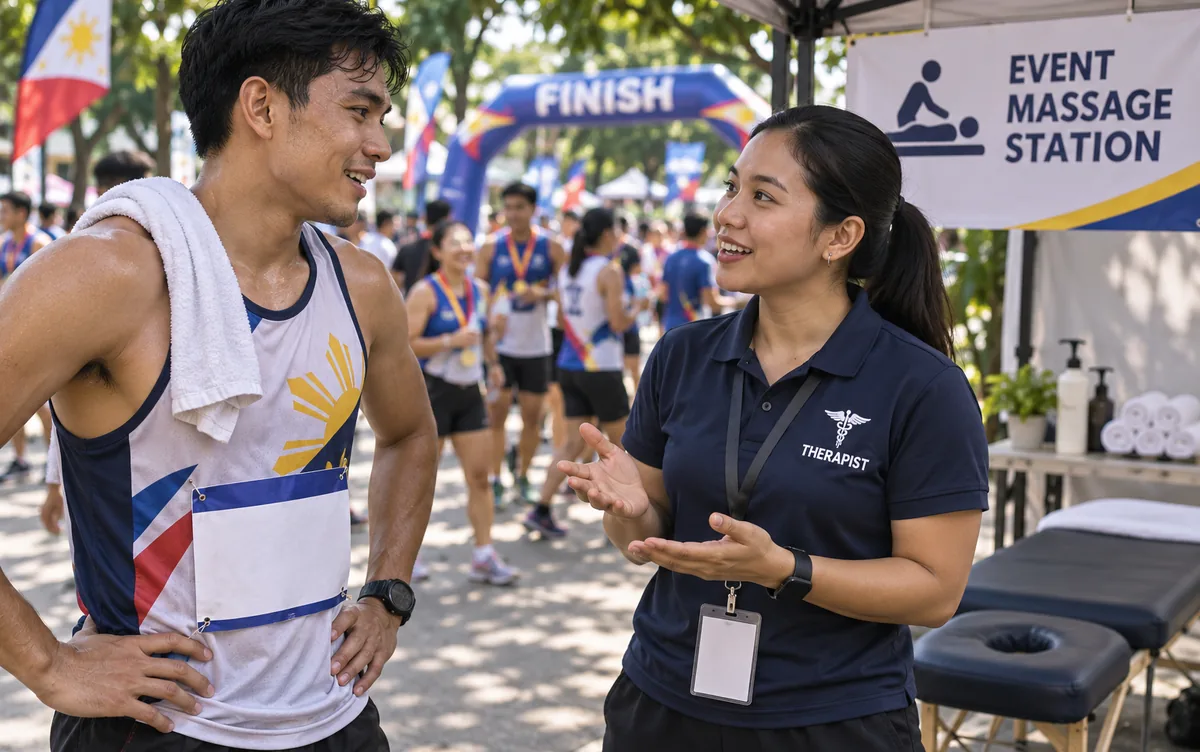
A massage station near a race finish is easy to spot and surprisingly easy to mistake for something else. Check whether you’re looking at a short recovery service, a sponsor demonstration, or the event’s medical station. If you feel unwell, were injured, or need medical help, go to the event medical team. If you feel well and would simply enjoy a brief massage, find out what the volunteers can actually offer.
Read the queue before joining it
A handful of massage tables can serve only so many runners. Ask whether you need a token, a particular bib, or a timed return slot. A line moving steadily may suit someone waiting for friends. The same line is a poor choice if bag collection is about to close or your ride is already parked outside.
Check whether your finish bag, medal, or hydration bottle can stay with you. If a friend holds your valuables, choose a meeting point beyond the tent and an alternative if phones are hard to hear. An official station can still be a busy public space with little room for personal belongings.
Choose one simple purpose for a short visit
A few minutes of comfortable hands-on work can be enjoyable after a race. It doesn’t need to prove your legs have recovered or predict how you will run tomorrow. A systematic review of sports massage found no clear improvement in measures such as strength, sprinting, or endurance. Keep your decision grounded in what you want to experience today.
Tell the practitioner the area you would like included and whether you’re comfortable with contact over your race clothing. Ask before assuming a calf, foot, or shoulder service is available. Spakol.net’s guide to massage menu terms helps distinguish the service being offered from what the banner brings to mind.
Keep race-day decisions separate from treatment decisions
Your choices about food, water, medical assistance, changing clothes, and reaching your support person have their own timelines. Don’t let a massage queue make them for you. If your day no longer leaves a comfortable opening, walk away and book a regular appointment another time.
For a later booking, note what you liked about the event station and what the crowd made difficult. Questions about a practitioner’s training are useful if you want to find someone who regularly works with recreational runners. A regular consultation also gives you more opportunity to discuss goals than a crowded tent can provide.
Matching two possible plans to one priority
A recreational runner feels well after a local race and would like a short massage before meeting friends for the trip home. The deciding priority here is enough time for the station without missing a fixed collection or meetup point.
| Possible arrangement | What the offer includes |
|---|---|
| First option | An event tent offers a brief clothed session with a queue and a limited choice of areas. |
| Second option | A separate private appointment can be arranged on another day with a longer consultation and a predictable start. |
Before choosing, find out whether the runner wants a few enjoyable minutes now or an unhurried appointment with more choice. An event station can fit a casual finish-day plan. It is less suitable when the queue conflicts with essential belongings, transport, privacy, or a need for medical assessment.
Know what the station can reasonably deliver
Read the sign or ask a volunteer for a plain description. Some event services have a short menu because a lot of runners want a turn and the practitioners have limited space. You may be asked to choose one area, stay in running clothes, or receive the service seated. Decide whether that is what you want before handing your belongings to a friend or committing to a queue.
The crowd affects the experience as much as the service itself. You may find repeated announcements distracting or feel uncomfortable discussing a preference within earshot of other runners. Ask to give any essential personal information quietly. If a discussion needs clinical privacy or a real assessment, a finish-line relaxation station is the wrong place to compress it into a hurried slot.
Choose a sensible meeting point after the tent
A finish area can look different once barriers come down, queues shift, and organizers clear equipment. Agree on a distinct landmark beyond the massage tent, preferably one that will still exist if a temporary banner is removed. Tell friends whether they should wait, go to baggage collection, or meet you later. A simple plan keeps an optional stop from holding up several people who are ready to leave.
If you are running with a club, do not assume that everyone wants a massage because one person does. Different runners may need food, dry clothes, comfortable transport, medical support, or just somewhere quieter to sit. Choosing separately can make regrouping much easier.
Decide what you want before you get to the front
It is easy to join a fun-run queue because friends are in it or because a sponsor has set up an inviting tent. While waiting, ask yourself what you actually want from the next ten minutes. You might want to find your family, collect dry clothing, take a seat somewhere quiet, or receive a brief massage. Choosing the last option makes sense when the format, available time, and surroundings feel right to you on that particular day.
Look for practical clues about the station rather than trying to evaluate it from the size of the line. Read the posted service and closing information. Check whether a volunteer can tell you the process before you reach the table. Watch how the waiting area and treatment area are separated without photographing clients or listening to private discussions. Those observations help you choose without assuming popularity is evidence of suitability.
- Confirm whether the next step is a timed appointment, a token, or an ordinary first-come queue.
- Give a companion responsibility for a bag or a meetup only if both of you have clearly agreed to that plan.
- If an injury or illness becomes the real issue, tell event staff and go to the appropriate medical service.
You can change your decision even after spending time in the line. The minutes already spent waiting do not make the remaining appointment more beneficial or more urgent. If your ride is ready or you would rather get home, leaving the tent is a perfectly sensible finish-day choice.
Who can answer questions at the finish?
The event desk controls the queue, medical staff assess health concerns, and the massage practitioner describes the short service actually on offer. If you want to talk about a particular preference before you decide, Spakol.net’s guide to communicating with a massage practitioner has wording you can use even in a busy tent.
| Who to ask | What they can establish |
|---|---|
| The race organizer or station desk | Who can use the station, whether tokens are offered, closing time, and where the medical team is located. |
| The massage practitioner | The areas, clothing arrangement, privacy, and duration the event service can actually provide. |
| The runner | Whether they feel well, want a massage, and have time before baggage or transport closes. |
A change announced to one participant can affect other people who never saw the message. Identify the person who needs the update and pass on the logistical information relevant to them. Private choices, intake details, and personal reasons generally do not belong in a shared timetable. Event options and medical arrangements can differ even between races at the same venue.
Four details worth settling in advance
The queue and the bag tent
Your runner friends are waiting at bag collection, which will close before everyone in the massage queue is likely to be seen. The order of two ordinary race-day errands can determine whether a massage fits at all.
Can I collect my bag first and return with a token, or would I need to join the line again?
Prioritize your possessions and the group’s departure, then see whether a service slot still works.
A massage banner beside first aid
Two tents sit close together and a runner who feels unwell is unsure which volunteer can assess them. A relaxation service and a medical response have different purposes even when their tents share a finish area.
Which way is the event medical station, and who can help me get there?
Get help from event medical staff for illness or injury and revisit massage only if appropriate later.
Only a few minutes available
You feel well and have a brief station slot, but the volunteer asks which area you most want included. A short event service is easier to enjoy when the goal fits the available minutes and setting.
Can you explain the areas offered today so I can choose one focus for the time?
Make one clear choice or skip the station if none of the offered options appeals.
A public table feels too exposed
You would enjoy a massage but feel uncomfortable receiving one in full view of a crowded finish corral. A service that sounds appealing in a clinic may feel quite different in a race-day crowd.
Do you offer a clothed seated option or a station with more visual privacy?
Choose the available setting only if it suits you, or save the idea for a private appointment.
How to read the offer at a finish-line station
Notice the difference between a routine that usually works and the arrangement available for this particular visit. You can ask for a concrete example without asking anyone to guarantee an outcome.
A reply you can work with
The next available clothed slot covers one area, and this volunteer can explain the queue and the latest return time.
What makes this answer specific is that the runner can see the immediate service and the cost in time.
A question worth asking next
“Just join the line and someone will see you soon.” If you receive a reply like that, ask one narrower question.
Do I have a confirmed place or a queue, and what service is available when I reach the front?
When a different plan is offered
You can return with a token, but the station closes when the official event service ends.
In this situation, check bag collection and transportation deadlines before relying on a later return. If that condition changes, revisit the choice while you still have a practical alternative.
Putting the request in writing
I’m interested in the short massage and feel well. Which areas are offered, how does the queue work, and can I leave in time to collect my bag?
For this request, a useful confirmation identifies the available service, queue arrangement, and time the runner must leave.
What is worth remembering
Save the actual service and setting you enjoyed if you want to look for a similar appointment on another day. Here is one way a client could record the outcome.
The clothed event station suited me when I had time to wait. Next time I will check the bag collection deadline before deciding whether to queue.
A good finish-line experience may have depended on shade, a short queue, a clothed option, or simply having time before your ride. If you’re hoping to repeat it, note which of those conditions was present. A different race may have a very different station even if the same organizer runs both events.
Frequently Asked Questions
Can a nonrunner use the finish-line massage station?
Eligibility depends on the organizer and sponsor. Ask the event desk whether registration, a bib, or a companion pass is required.
Does a short race-day massage include a later clinic appointment?
Ask the organizer or practitioner whether the event includes a separate voucher. If it does, check the participating branch, eligible service, and expiry date.
What if I left my race bib with baggage collection?
Ask the event desk which proof of participation it accepts. Avoid giving a volunteer unrelated personal information.
Does an event massage count as a competition result or medical clearance?
No. Results come from race officials, and medical clearance comes from an appropriately qualified healthcare professional.
Can I tip the practitioner at a sponsored event?
Ask the organizer whether tips are permitted. A simple thank-you is appropriate when the event has a no-tipping policy.
Try These Massage Packages
HOME + HOTEL SERVICE
(P1,300 + Fare/Transpo)
1 hour and 45 minutes
Whole Body Massage
Body Scrub + Wash
PRIMERO™ Massage Sequence
ALTERRA PACKAGE
(P2,500 + Fare/Transpo)
1 hour + 45 minutes
Whole Body Massage
ALTERRA™ Massage Sequence
Exfoliating Body Scrub + Body Wash
Signature Sensual Massage +
EUFORIA PACKAGE
(P2,750 + Fare/Transpo)
2 hours
Whole Body Massage
EUFORIA™ Massage Sequence
Exfoliating Body Scrub + Body Wash
Signature Sensual Massage ++
INFERNO PACKAGE
(P3,000 + Fare/Transpo)
2 hours + 15 minutes
Whole Body Massage
INFERNO™ Massage Sequence
Exfoliating Body Scrub + Body Wash
Signature Sensual Massage +++
Lingam or Yoni