





















Planning a Home Massage When You Share a Small Apartment
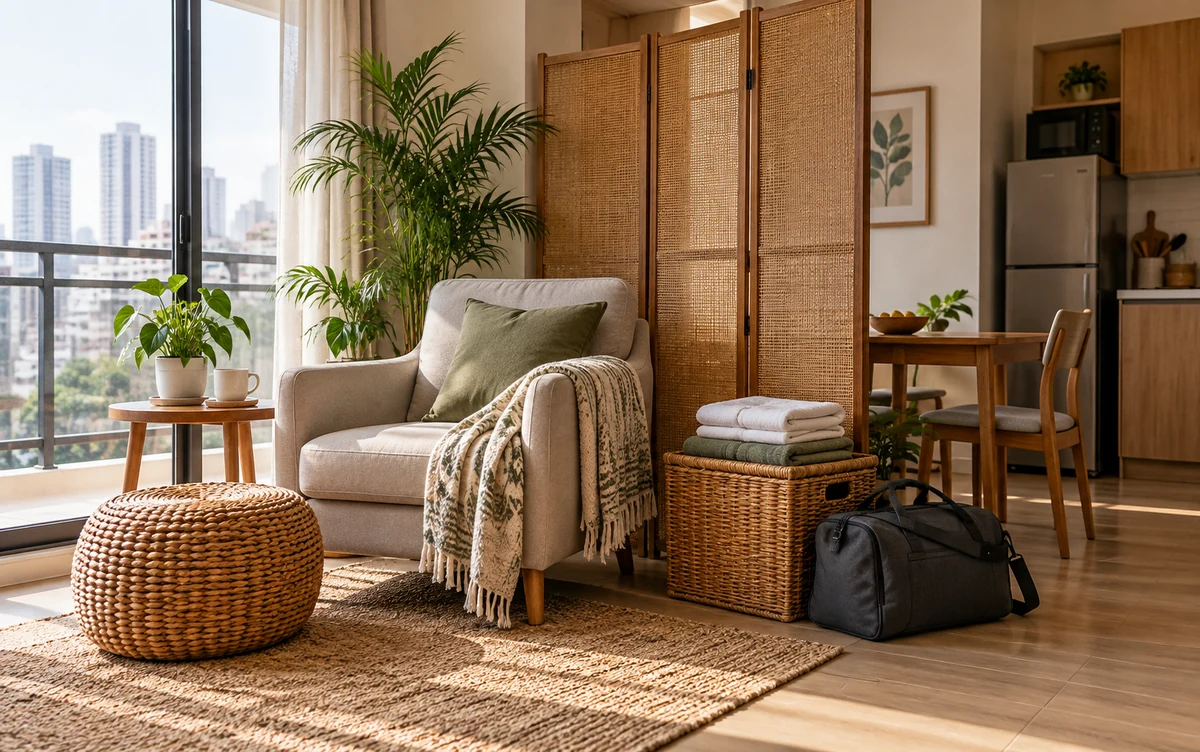
A small apartment can still require careful planning for a home massage. The challenge is not only finding enough floor space. You also need to consider privacy, household routines, pets, interruptions, and whether the provider's equipment fits the setting. A realistic description of the space helps everyone decide whether the appointment is practical.
This guide is for Filipino households arranging a professional wellness service at home. It focuses on sharing a living space respectfully rather than assuming that every apartment can become a treatment room. If the arrangement does not work for the client, household, or provider, choosing another setting is a reasonable option.
Decide whether the household can accommodate the visit
Start by discussing the plan with the people who share the apartment. Explain when the appointment would happen, which area you hope to use, and how long that area may be unavailable. Do not assume that paying for the booking gives you exclusive use of a shared living room without a conversation.
Ask whether the timing conflicts with work calls, meals, study, or other ordinary routines. A quiet period for one resident may be a busy period for another. Choose a time that can reasonably be protected instead of expecting everyone to improvise once the therapist has arrived.
Keep the discussion practical and limited. Other residents do not need to know private details about your preferences, but they should understand the use of the shared space. Agree on the arrangement before sending payment so a household disagreement does not become an avoidable cancellation.
Ask what the provider's setup requires
Tell the provider that the appointment would take place in a compact, shared home. Ask what equipment it brings and how much clear working space is needed. A provider may use a portable table, another agreed surface, or a setup that simply will not fit your room.
Describe the actual access path, including narrow doorways, corners, and stairs if relevant. Do not guess that equipment can be squeezed through or assembled wherever convenient. If measurements are needed, obtain them carefully without moving heavy items or creating an unsafe arrangement just to make the booking possible.
Also ask what you must supply. Towels, linens, a suitable surface, or a place for equipment should be agreed in advance. The provider can then assess the setting honestly. A clear no is more useful than an appointment confirmed on a misleading description of the available space.
Choose the area with privacy in mind
A bedroom, living room, and shared dining area offer different levels of privacy and convenience. Consider who needs access during the appointment and whether doors or partitions provide the separation you want. Do not describe a frequently used passage as a private room if other residents must keep walking through it.
If a screen is available, discuss what it can and cannot achieve. A visual divider may not reduce sound or stop ordinary household movement. Decide whether that level of separation is acceptable to you and explain the arrangement to the provider. Privacy should be understood rather than assumed from a piece of furniture.
For general communication and boundaries, consult Spakol.net's massage etiquette guide. Your own apartment arrangement should still be confirmed directly. The goal is a setting in which you can understand the service and communicate preferences without unnecessary interruptions or exposure.
Make a plan for pets and everyday interruptions
Tell the provider if a pet is likely to be in the apartment. Ask whether that affects its ability to attend and agree on a suitable separation arrangement where needed. Do not assume every therapist is comfortable working around an animal or that a pet will remain quiet simply because the household expects it to.
Arrange deliveries, calls, and other predictable tasks around the appointment where practical. If another resident agrees to answer the door, tell them what they are taking responsibility for. Avoid making the therapist responsible for packages, household supervision, or unrelated tasks while the service is underway.
If you cannot avoid interruptions, describe that honestly before booking. A shorter appointment or a different setting may be more practical than a longer session that repeatedly stops. The provider should understand the likely conditions, and you should understand how pauses affect the agreed duration and price.
Clear only what needs to be cleared
Prepare an unobstructed route and the agreed working area. Move small items, loose cables, and breakable objects where practical. Keep doors and essential household access usable. You do not need to redecorate the apartment or attempt difficult furniture moves to create the appearance of a spa.
Set aside a suitable place for the provider's equipment and supplies. Keep food, personal papers, and unrelated items away from the working surface. Ask what lighting and room-temperature arrangement will be practical. The provider should have enough information to work within the setting you described.
Avoid purchasing extra equipment before confirming that it is necessary and acceptable to the provider. A suggestion from an online article may not suit the actual service. Spakol.net's overview of massage techniques can help with vocabulary, but it cannot determine your provider's setup requirements.
Keep household coordination separate from the service
Once the therapist arrives, the ordinary booking conversation still matters. Reconfirm the service, hands-on duration, accepted products, price, and any areas or steps you want to skip. Preparing the apartment does not replace your opportunity to understand the session and make choices about it.
If another resident helps with entry or payment, clarify the limits of that role. The actual client should make their own decisions about the service. A household member answering the door does not automatically need access to the client's intake conversation or private booking messages.
Likewise, respect the therapist's boundaries within the home. Keep the interaction connected to the professional service and ask before taking photographs. The site's article about therapist qualities offers prompts for evaluating professionalism, while considerate household planning supports the arrangement from the client's side.
Leave enough time for the complete visit
Ask whether the appointment window includes entry, setup, hands-on service, and packing. A shared room may need to be available longer than the advertised treatment minutes. Tell other residents the realistic period rather than promising they can use the space again at an uncertain moment.
After the service, allow the provider to pack the agreed equipment without being rushed by another household activity. Check the space and return shared items to their ordinary places. If anything about the arrangement did not work, note the practical issue before considering another booking.
Finally, decide whether home service was actually convenient for everyone involved. A small apartment can be suitable when space, privacy, timing, and expectations align. When those conditions remain uncertain, a branch visit or another date may be a better fit than forcing a professional appointment into a setting that cannot support it.
Sketch the appointment before rearranging the apartment
Start with a simple description of the space: where equipment would go, where the therapist would place supplies, and how other residents would move between rooms. You do not need a formal floor plan. The purpose is to see whether the arrangement can work without blocking ordinary access or expecting everyone else to abandon the shared home.
For example, a living room may be the largest area but also the only route to the kitchen and bathroom. Closing a curtain would not resolve the need for people to pass through. Discuss a workable time or another available space before booking. Visual privacy, shared access, and quiet are separate questions that deserve their own answers.
Ask the provider which measurements or details it needs to assess the setup. A compact apartment is not automatically unsuitable, but the therapist should not arrive expecting a different layout. Describe the surface and working area honestly. Let the provider explain whether its equipment can fit, rather than offering a household item as a substitute without agreement.
Agree on household use without overcomplicating it
Tell other residents how long the full visit is expected to occupy the chosen area, including setup and packing. A 60-minute service may not describe the complete period when the room is unavailable. Ask the provider about the sequence, then agree on a practical household arrangement. Avoid promising that the space will reopen at a time you have not confirmed.
If someone needs to work or study, discuss where calls, meals, and normal movement can happen. You do not need everyone to remain silent throughout the apartment. You need a realistic level of privacy and a plan for unavoidable interruptions. When those conditions cannot be arranged comfortably, selecting another date or location can be simpler than imposing a strained household rule.
Make the plan clear to the therapist as well. A shared home may have a doorbell that another resident answers or a pet kept in a separate area. Explain the relevant arrangement without sharing unrelated details about household members. Practical preparation should help the appointment proceed, not turn the provider into a manager of the home’s daily routines.
Clear useful space without creating a different obstruction
Move small, manageable items out of the working area and check the route to the entrance. Keep everyday essentials within reach for residents who need them elsewhere. Do not move a clutter problem into a doorway, corridor, or another person’s workspace. The goal is safe ordinary movement around an agreed setup, not an apartment that looks empty in a photograph.
Choose a place for products and supplies where they are unlikely to be knocked over. Ask the provider whether it needs a stable surface or brings its own arrangement. Keep personal documents and open devices away from the setup when practical. This protects privacy and gives everyone a clearer understanding of which belongings form part of the appointment area.
Plan for the end of the visit too. Allow the therapist to gather equipment without a household member immediately needing the same floor space. Return moved belongings in a manageable order after the provider leaves. A useful arrangement should be straightforward to reverse without heavy lifting or a long period of household disruption.
Assess whether the plan is worth repeating
Afterward, ask the residents involved whether the arrangement worked for them. They may have noticed a practical issue that was not obvious before the visit, such as sound carrying into a work area. Discuss a specific adjustment instead of assuming that one successful appointment permanently settles everyone’s preferences about using a shared room.
Keep a brief note of the useful setup, required supplies, and full visit period. Check the provider’s current arrangements before repeating it, especially if equipment or the number of clients changes. A small apartment can support a carefully planned appointment when the household and provider agree, but convenience should be judged by the complete experience rather than floor space alone.
Your shared-home plan
- Agree with household members on the space and timing.
- Tell the provider the apartment's actual size and layout.
- Check privacy, access, and the equipment setup together.
- Plan for pets, deliveries, and predictable interruptions.
- Keep enough time for entry, setup, service, and packing.
Frequently Asked Questions
Can my roommate use the second half of my session?
Only if the provider agrees to a revised booking. A session for one client should not be assumed transferable midway, and each participant should understand the separate arrangement.
What if my landlord restricts outside service providers?
Check the applicable property rules before booking. Obtain permission where required and do not ask the therapist to conceal the purpose of the visit or disregard an access restriction.
Can I request separate receipts for a shared payment?
Ask the provider before paying. Explain the actual payment arrangement and confirm what documentation it can issue without assuming its usual format can be changed.
Should I book while renovation work is happening nearby?
Consider the expected noise and access conditions, then tell the provider. If the setting is unsuitable or uncertain, choosing another time may be more practical.
May I ask for a reminder the day before the appointment?
Ask whether reminders are available and confirm the preferred channel. Keep your own calendar note as well, since a reminder request is not a substitute for the booking confirmation.

Try These Massage Packages
HOME + HOTEL SERVICE
(P1,300 + Fare/Transpo)
1 hour and 45 minutes
Whole Body Massage
Body Scrub + Wash
PRIMERO™ Massage Sequence
ALTERRA PACKAGE
(P2,500 + Fare/Transpo)
1 hour + 45 minutes
Whole Body Massage
ALTERRA™ Massage Sequence
Exfoliating Body Scrub + Body Wash
Signature Sensual Massage +
EUFORIA PACKAGE
(P2,750 + Fare/Transpo)
2 hours
Whole Body Massage
EUFORIA™ Massage Sequence
Exfoliating Body Scrub + Body Wash
Signature Sensual Massage ++
INFERNO PACKAGE
(P3,000 + Fare/Transpo)
2 hours + 15 minutes
Whole Body Massage
INFERNO™ Massage Sequence
Exfoliating Body Scrub + Body Wash
Signature Sensual Massage +++
Lingam or Yoni