



















Massage in Quezon City: Plan Access Before You Travel
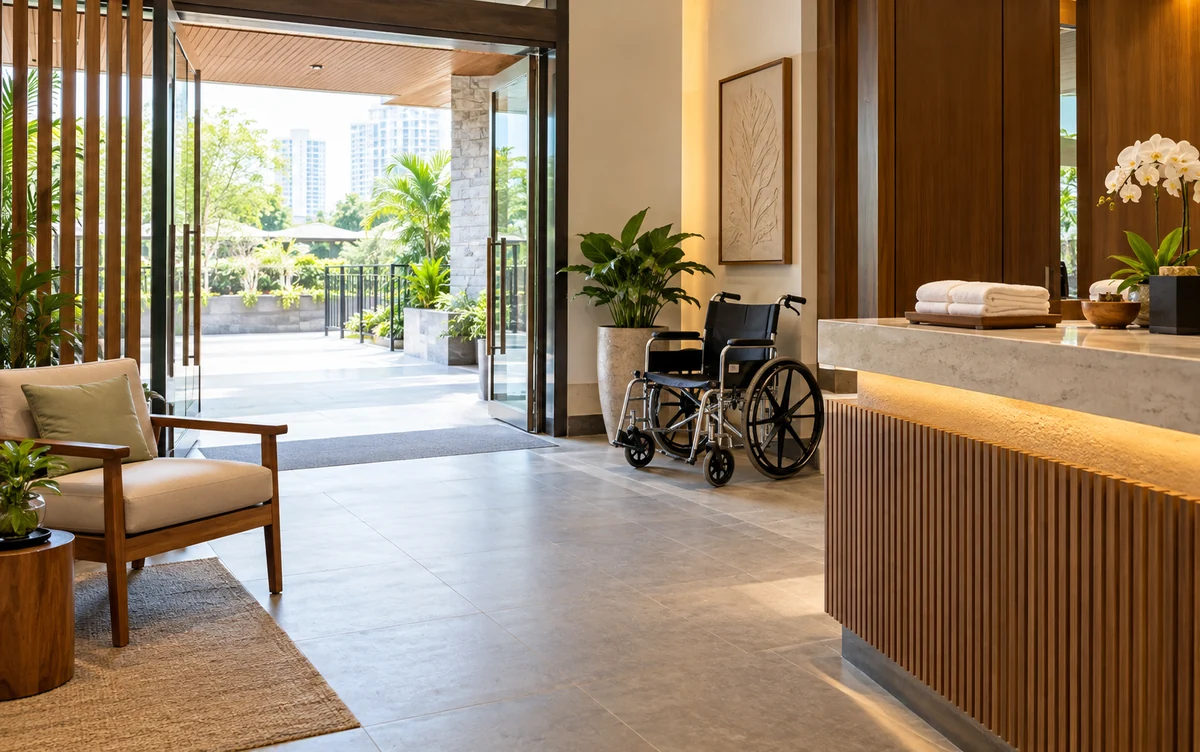
Choosing a massage appointment in Quezon City involves more than finding a nearby map pin. The entrance, walking route, building layout, seating, and treatment-room setup can determine whether a visit is practical. If you have an access requirement, confirm the specific arrangement before booking rather than relying on a broad description such as accessible or convenient.
This guide is for Filipino clients and companions planning a professional wellness visit. It covers practical access questions, not medical suitability or a list of verified accessible establishments. The most useful information comes from a clear conversation about your needs and the actual features of the branch.
Describe your requirements in concrete terms
Start by identifying what affects your visit. You might need an entrance without steps, a chair with arms, space for a mobility aid, or a route that avoids a long walk. These are different requirements. A general question about accessibility may produce an answer that does not address the feature you need.
Explain the practical requirement without feeling obliged to share a detailed diagnosis. For example, ask whether the route from drop-off to reception includes stairs and whether there is an alternative. The provider should be able to describe the physical arrangement even if it cannot assess your personal medical situation.
If another person is making the inquiry, let the actual client guide the questions where possible. A companion can help coordinate details without assuming what the client can do or wants to disclose. Clear information supports an informed choice and avoids turning an ordinary booking into an unnecessary discussion of personal history.
Trace the route from street to reception
Ask for the exact drop-off point and entrance. A building may have several doors, and the entrance shown in a photograph may not be the one clients use. Confirm whether the route includes curbs, ramps, steps, narrow gates, or a long corridor. Do not assume that a nearby parking area provides a suitable path.
If the business is above ground level, ask about the elevator and the route from it to reception. An elevator in the building does not necessarily answer questions about steps before the lobby or access after a certain hour. Request the whole route rather than a single feature in isolation.
When necessary, ask for a current description or an appropriately framed photo of the entrance. Avoid requesting images that expose clients or staff unnecessarily. The point is to understand the physical route. If the provider cannot confirm an essential detail, keep that uncertainty visible rather than filling it with an assumption.
Ask about waiting and changing spaces
Check what seating is available and whether you can wait somewhere suitable if you arrive a little early. A small reception area may have limited options. If standing for a long period is impractical, ask whether the appointment can be coordinated to reduce waiting without assuming that an exact start is guaranteed.
Ask where changing occurs and whether the space provides the room and privacy you need. A curtain, a separate room, and a changing area shared with other clients are different arrangements. Describe the relevant requirement and ask whether the branch can accommodate it for the specific booking.
Also consider the location of any restroom you expect to use. Ask about the route and relevant features rather than accepting a general yes. The provider's description should help you decide whether the visit is practical; it should not require you to discover essential limitations only after arriving.
Discuss the treatment-room setup
Ask what surface is used for the chosen service and how the room is arranged. If a table is involved, request the relevant information about access and available space. Do not assume staff can provide physical assistance that has not been discussed or that every setup can be adjusted on the day.
Explain whether you will bring a mobility aid or a companion and ask where they can remain during the appointment. A provider should understand what space is needed before allocating a room. Keep the conversation about the agreed service and avoid asking an untrained person to undertake assistance outside their role.
Spakol.net's massage etiquette guide offers general prompts for discussing preferences and boundaries. For access arrangements, obtain direct confirmation from the branch. A treatment name alone cannot tell you whether the room or equipment meets your requirements.
Give the journey enough flexibility
Quezon City covers many neighborhoods, so a city-wide label does not tell you how practical a route will be. Check the journey you actually intend to make, including transfers, the final walking segment, and the correct entrance. Avoid relying on a fixed travel-time claim from a general article or an old review.
Consider how weather could affect the final part of the trip. A route that is manageable in dry conditions may feel different with rain, slippery surfaces, or a long wait outside. You do not need to predict every delay, but you can identify whether there is a covered waiting or drop-off option.
Agree on how to contact the branch if the journey takes longer than expected. Ask about late arrival and whether a revised appointment would still be practical. A clear communication plan reduces uncertainty without requiring the provider to promise circumstances outside its control.
Keep preferences and health advice separate
A provider can describe its facilities and explain the service it offers. That does not mean it can decide every question about whether massage is appropriate for your personal health situation. If you need medical guidance, seek it from a qualified healthcare professional rather than treating an access conversation as a clinical assessment.
During booking, focus on what the provider must know to deliver the agreed arrangement. You may want a quieter room, extra time for communication, or an explanation before each step. Ask whether those preferences can be accommodated. You should also understand how to pause, request an adjustment, or stop the service.
The site's article on therapist qualities provides prompts for evaluating professional communication. Consider the clarity of the response alongside the physical features. A reassuring tone is useful, but the essential access details should still be specific enough for you to make a decision.
Confirm the arrangement before paying
Summarize the entrance, room, seating, companion arrangement, service, hands-on duration, and total price. Include any access feature that is essential to the visit and ask the provider to confirm it. If a necessary feature changes, ask to be contacted before you travel so you can assess the alternative.
Keep your confirmation accessible in a form that works for you. If a companion assists with coordination, share the relevant details with their permission and keep the actual client involved. Avoid placing private information in public comments or sending unrelated records simply to support an ordinary access request.
Finally, use general service information only as a starting point. Spakol.net's overview of massage techniques may help with vocabulary, while the branch must explain its own facilities. A successful access plan is specific, practical, and agreed before the journey begins.
Turn a general access question into a route description
Instead of asking only whether a Quezon City spa is accessible, ask staff to describe the route in order: drop-off, entrance, reception, changing area, and treatment room. Identify any step or doorway that affects your visit. This creates a practical picture of the journey without relying on a broad label that different people may interpret differently.
For example, a branch could be on the ground floor while still having steps between the pavement and reception. Another might have an elevator but a narrow doorway beyond it. These hypothetical examples show why one feature does not answer the whole question. Ask about the particular barrier that matters to you rather than requesting a general reassurance.
When measurements are needed, explain which measurement would help. Door clearance, available turning space, and table access are different issues. Ask the provider what it can accurately confirm and keep unknown details visible. Avoid treating a rough estimate as a verified measurement if a small difference could determine whether the visit is practical.
Coordinate assistance without assuming staff can provide it
Decide what you can manage independently and what assistance, if any, you intend to arrange. A companion might help with directions or carry a bag, but those roles should be agreed with the people involved. Do not assume reception staff or a therapist can provide lifting, transfers, or other physical assistance simply because they are present.
Ask where a companion can wait and whether they can join the consultation at your request. Their presence should support your choices rather than replace them. You can authorize practical coordination while keeping personal service preferences between you and the therapist. Explain the arrangement beforehand so staff do not direct every question to the companion by default.
Also ask how the appointment can allow for the time you need to enter, change, and communicate. Extra coordination time is different from extending hands-on treatment. Ask whether the provider can accommodate the full sequence and how the booking is priced. A clear schedule can be more helpful than arriving early and hoping suitable seating will be available.
Check the last part of the journey
A route-planning app can identify a nearby destination without showing the condition of every pavement, crossing, or building entrance. Ask for the correct drop-off location and consider the final distance you expect to cover. If you need a covered waiting area or a shorter walking route, request those details directly rather than assuming the map explains them.
Think about the return trip too. Confirm where you can wait while arranging transport and whether someone accompanying you can reach the same point. A suitable arrival route does not necessarily answer how you will leave after the visit. Planning both directions helps avoid relying on an entrance that closes before your appointment finishes.
If an essential feature changes, ask the branch to contact you before you travel. An unavailable elevator, a different treatment room, or a temporary entrance can affect the plan. Confirm what alternative exists and decide whether it meets your needs. You do not have to accept a changed arrangement solely because the original booking was already made.
Keep an access note you control
A useful private note can list the entrance, necessary room features, assistance arrangements, and confirmed contact. Write it in practical language that you can reuse without disclosing a medical history. Review it for each new branch because another provider may have a different layout. A note from one visit should not be treated as a universal accessibility certificate.
After the appointment, describe facilities factually if you choose to leave feedback. You can say that the route you used had a certain feature or that staff explained an arrangement clearly. Avoid deciding that a venue suits everyone based on your experience alone. Specific observations help other clients prepare questions relevant to their own requirements.
Your access questions
- Describe the features you need in practical terms.
- Trace the whole route from drop-off to reception.
- Ask about seating, changing space, and the treatment setup.
- Confirm the role and location of any companion.
- Record essential arrangements before paying or traveling.
Frequently Asked Questions
Can a companion pay while the client handles the consultation?
Ask the provider to record the arrangement clearly. Payment coordination should not prevent the actual client from making their own choices about the service and personal information.
May I ask for booking details in larger text?
Yes, you can request a format that is easier to read. Ask the provider to send the essential details clearly rather than relying on a small promotional image.
What if I use a communication app during intake?
Tell the provider in advance and ask for enough time to communicate. Keep important requests available in a form you can use without depending on a rushed conversation.
Can I bring a service animal?
Ask the establishment about the arrangements that apply and confirm any practical requirements before traveling. Do not assume that a general pet policy answers the service-animal question.
Should I describe a temporary injury in a public review?
Share only what you are comfortable making public. You can describe the access features and your experience without disclosing private medical details or identifying information.

Try These Massage Packages
HOME + HOTEL SERVICE
(P1,300 + Fare/Transpo)
1 hour and 45 minutes
Whole Body Massage
Body Scrub + Wash
PRIMERO™ Massage Sequence
ALTERRA PACKAGE
(P2,500 + Fare/Transpo)
1 hour + 45 minutes
Whole Body Massage
ALTERRA™ Massage Sequence
Exfoliating Body Scrub + Body Wash
Signature Sensual Massage +
EUFORIA PACKAGE
(P2,750 + Fare/Transpo)
2 hours
Whole Body Massage
EUFORIA™ Massage Sequence
Exfoliating Body Scrub + Body Wash
Signature Sensual Massage ++
INFERNO PACKAGE
(P3,000 + Fare/Transpo)
2 hours + 15 minutes
Whole Body Massage
INFERNO™ Massage Sequence
Exfoliating Body Scrub + Body Wash
Signature Sensual Massage +++
Lingam or Yoni