





















Massage Draping: How to Turn Over and Stay Covered
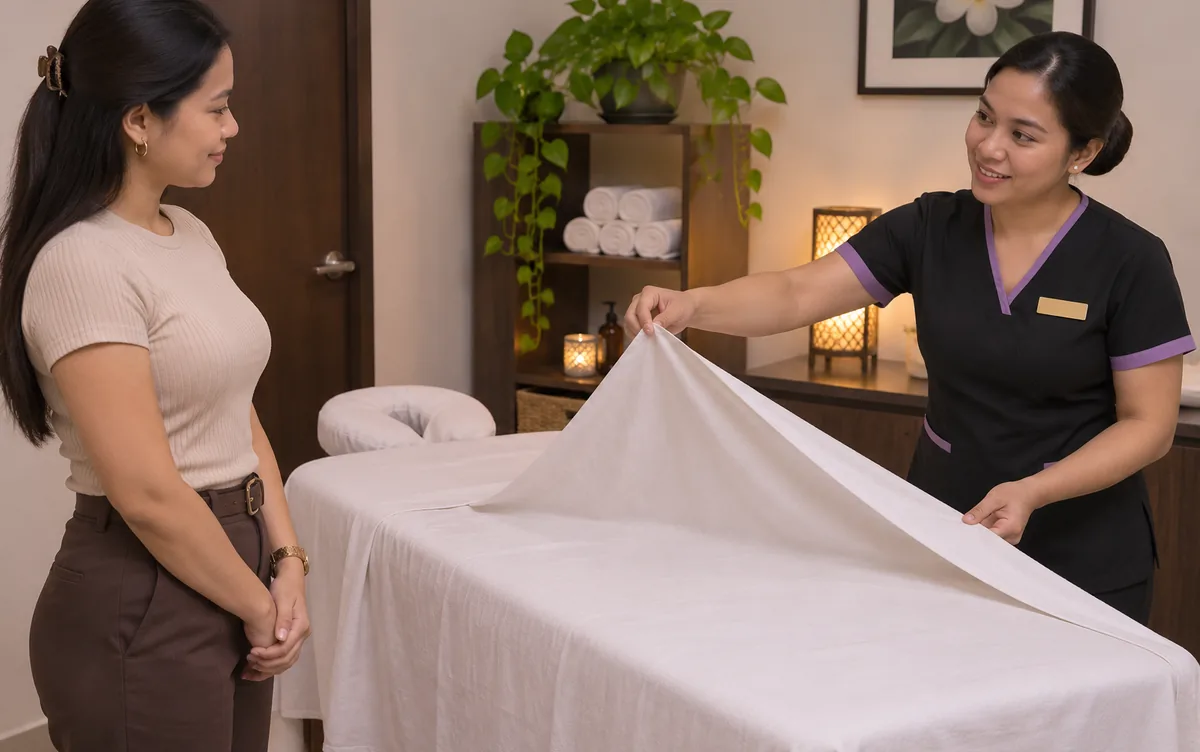
The first time a therapist says “turn over when you’re ready,” several questions can arrive at once. Which way should you turn? Who holds the sheet? What happens to the pillow under your ankles? You can ask for the whole sequence in plain language while you’re still sitting comfortably. A respectful massage draping arrangement makes the turn predictable and lets you choose when to move.
Draping is the use of a sheet, towel, or other appropriate covering to maintain privacy during a professional session. It is an active part of the therapist’s work. You don’t have to perform an unfamiliar maneuver while trying to keep every corner of the sheet in place yourself.
Establish the signal before the first turn
Ask the therapist to explain how they normally handle a position change. A useful explanation identifies who holds the covering, which supports need to move, and whether you should roll toward or away from the therapist. “I’ll tell you when the sheet is secure, then you can turn in your own time” is an instruction most people can use immediately.
If you prefer to move without hands-on help, say that. If you do want help, discuss what kind and where the therapist may touch you. Professional standards on appropriate touch and informed consent describe the importance of discussing positioning and draping with the client. In the room, that conversation can be as simple as a sentence and a pause long enough for an answer.
Choose the clothing and covering that feel right
You can ask to remain in clothing that feels comfortable or to keep specific garments on. The practitioner can explain which parts of the service are possible over fabric. If you wear something with an awkward tie or clasp, arrange it yourself in private. A massage appointment can continue with a different focus if a garment makes a particular area hard to reach.
If you want two layers, explain what matters about them. A sheet might provide coverage while a blanket adds warmth. During a turn, you may prefer the blanket lifted away while the sheet is held securely. Check what the therapist proposes before anything moves. Spakol.net’s client guide to massage etiquette also covers how to communicate personal boundaries at the start of an appointment.
Take the turn in your own time
When the therapist says the sheet is ready, check that you have enough space and know where the edge of the table is. If a pillow is still in your way, ask for it to be moved before you start. A therapist can wait while you gather the sheet closer or choose to sit up instead. You can stop a turn halfway and ask for a fresh arrangement.
Once you are in the new position, take a moment to settle the fabric before treatment resumes. Ask for a corner to be moved away from your face or for more coverage at your side. The person standing beside the table sees the outside of the sheet. Only you can tell whether it feels secure where you are lying.
Speak up if the arrangement is uncomfortable
“Please hold the sheet closer on this side” gives the therapist something immediate to change. If you still feel exposed or if you have lost confidence in the arrangement, ask to stop and dress in privacy. You can decide afterward whether to continue in clothing, finish the appointment, or speak privately with the manager.
A return visit is easier when the instruction identifies what worked. “I turned myself after the therapist secured the sheet and moved the knee pillow” is more useful than a note saying you were nervous. See how to state a preference to a massage therapist if you would like to agree on the same procedure with a different practitioner.
What two offers can look like in practice
A client wants to enjoy a table massage but feels anxious about the moment a therapist asks them to turn under a sheet. The deciding priority here is a position change that keeps the client covered and in control.
| Possible arrangement | What the offer includes |
|---|---|
| First option | One practitioner offers a clothed appointment with almost no need to rearrange the fabric during the turn. |
| Second option | Another explains the sheet hold, offers two layers, and agrees to wait while the client turns at their own pace. |
Before choosing, find out whether the client prefers to remain dressed or wants a particular draped sequence. Both settings could protect privacy. What distinguishes them is the client’s comfort with the clothing, the covering, and how they expect to change position.
Rehearse the instruction while you can still see the table
Ask the practitioner to show you the direction of the turn on the empty table before the appointment begins. Looking at the table from the doorway gives you a reference that is easier to remember once you are lying down. If the therapist says to turn toward them, ask where they will stand when the time comes. If a pillow is normally removed, establish whether you wait for a cue after it is gone.
This can take less than a minute and often answers a question people hesitate to ask. You might discover you prefer to sit up, or that your usual direction of turning brings you close to a wall. The therapist can shift the setup before you are covered and trying to picture the room from memory.
Separate coverage from warmth
A thick blanket can feel reassuring when you are still and cumbersome when you want to turn. A thin sheet can give adequate coverage yet make you feel cold when the room fan is on. Tell the therapist whether your immediate concern is weight, warmth, or how closely the covering sits. The solution to one can make another worse if nobody knows which matters.
After the move, let the therapist know when you are ready to resume. You may want to arrange clothing, tuck your hair clear, or bring the sheet a little higher before the next contact. An explicit “I’m ready now” gives both people a clear endpoint to the transition.
Before the therapist asks you to turn
- Agree which position comes next and whether you want to roll, sit up, or move in another way.
- Have the practitioner identify who handles the top cover and when any supporting pillow will be removed.
- Wait until the covering feels secure, move at your own pace, and let the therapist know when you are ready for the next contact.
Who decides how a turn will work?
Ask reception about the changing area and available covers, then ask the therapist how the turn itself works. If you have particular linen preferences, Spakol.net’s guide to fresh sheets and treatment-room supplies helps distinguish what staff can prepare beforehand from what you will decide once you are lying on the table.
| Who to ask | What they can establish |
|---|---|
| The front desk | Whether the room offers changing privacy and the larger or additional covering requested. |
| The practitioner | How they will secure the sheet, move supports, explain the turn, and wait for the client’s cue. |
| The client | Which garments stay on, what assistance is wanted, and when they feel ready for contact again. |
When testing a change, keep the parts already working as they are if possible. Otherwise you may finish the trial unsure whether the improvement came from the new arrangement or from an unrelated change to the room. A brief description of what you actually felt can guide the next decision. The same draping request can require different timing in a clothed session and a sheet-draped one.
Four situations to talk through
The unexpected first instruction
You hear the cue to turn before the therapist has explained which way to face or what will happen to the blanket. Clear sequencing prevents a client from having to interpret a hurried gesture while lying down.
Before I move, can you describe the whole turn and tell me when the sheet is secure?
Stay in the current position until you understand the instruction and feel ready to move.
A second cover for warmth
You enjoy having a blanket over the sheet but find both layers too heavy to manage together when you turn. Separating warmth from coverage lets the practitioner address the problem without uncovering the client.
Could you remove the blanket for the turn and keep the sheet held securely?
Ask for the blanket back once you are settled and check that the edge sits where you want it.
Sitting up to change direction
You would rather sit up under a secure cover and reposition yourself than roll from one side to the other. An instruction to roll may be a usual habit at the studio even when another sequence is practical.
Can I sit up and move myself while you hold the cover where we agree?
Work out where you will sit and how your clothing or sheet will stay in place before moving.
A draft at the side of the table
After turning, you feel cool air along your side even though the therapist can see that most of the sheet is in place. A small gap can be hard to see from the opposite side of the table.
Please pause and bring the edge in closer on my left before starting again.
Give the specific side and wait until you feel covered before inviting the therapist to continue.
How to evaluate an explanation of draping
A helpful response has room for a specific preference and a realistic alternative. A general promise about comfort tells you less than an explanation of the actual appointment.
A useful first reply
The therapist holds the agreed cover while you turn yourself, then waits for you to say you are settled.
This gives you a basis for a decision because the roles of the client and therapist are both clear.
When the reply is too broad
“Our staff always handle everything professionally.” The statement may be reassuring, but it leaves part of the arrangement open. You can ask directly for the information you need.
Could you explain what you do with the cover and when you ask me to move?
If the answer depends on availability
We can do a clothed version, but it will change the areas and techniques available.
In this situation, consider the different service on its own terms before choosing it. Ask for the part that is confirmed now and the part that someone will still need to check.
What to say when you contact the provider
I’d like the turn explained before the massage. Please tell me how the sheet will be held, when I should move, and whether I can sit up and reposition myself.
For this request, a useful confirmation identifies the agreed clothing, cover, cue, and way to request a pause.
What is worth remembering
Keep the wording for the turning cue that worked for you, especially if you will see another practitioner. For your own reference, you could adapt a note like this.
I prefer to move myself after the therapist says the cover is secure. Please replace the blanket after I turn and wait until I say I am settled.
Keep the instruction about the turn in your own words. It may be useful even when you visit a different practitioner. Tell them which part you want to control personally, when you want the sheet secured, and how they will know that you are ready for treatment to resume.
Frequently Asked Questions
May I bring a personal shawl to wear between reception and the changing area?
Ask about the venue’s rules and where the shawl can be stored once you are ready. Keep it separate from linens the team will collect for laundering.
May I avoid a face-up position altogether?
Ask what work the therapist can provide in your preferred position. Choose a service whose coverage and duration support that plan.
Can I ask for a private changing area at a community event?
Yes. Ask the organizer about a screened or enclosed space. If privacy is limited, a fully clothed service or a different setting may suit you better.
Who should handle a robe belt before a session?
You can tie or untie your own robe in private. Ask where it should go and how to let the therapist know you are ready.
Can I specify a language for turning instructions?
Yes. Give the branch the language you understand best and ask whether the assigned therapist can explain position changes in it.

Try These Massage Packages
HOME + HOTEL SERVICE
(P1,300 + Fare/Transpo)
1 hour and 45 minutes
Whole Body Massage
Body Scrub + Wash
PRIMERO™ Massage Sequence
ALTERRA PACKAGE
(P2,500 + Fare/Transpo)
1 hour + 45 minutes
Whole Body Massage
ALTERRA™ Massage Sequence
Exfoliating Body Scrub + Body Wash
Signature Sensual Massage +
EUFORIA PACKAGE
(P2,750 + Fare/Transpo)
2 hours
Whole Body Massage
EUFORIA™ Massage Sequence
Exfoliating Body Scrub + Body Wash
Signature Sensual Massage ++
INFERNO PACKAGE
(P3,000 + Fare/Transpo)
2 hours + 15 minutes
Whole Body Massage
INFERNO™ Massage Sequence
Exfoliating Body Scrub + Body Wash
Signature Sensual Massage +++
Lingam or Yoni