





















How to Read Spa Reviews in the Philippines Before You Book
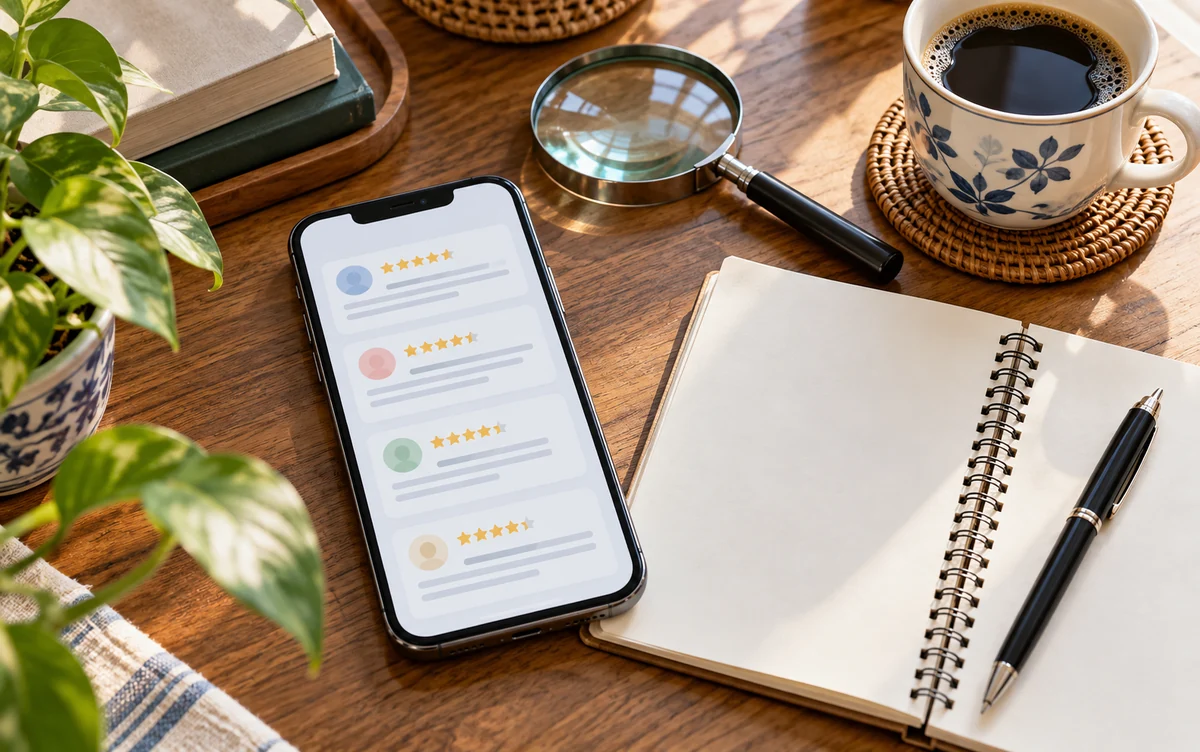
A spa with hundreds of stars can still be a poor match for your needs. Meanwhile, one unhappy review may describe a problem that has since been addressed or an experience unrelated to the service you want. Reading spa reviews in the Philippines works best when you look for specific, relevant details rather than treating a rating as a complete verdict.
The goal is not to identify every fake review or investigate individual reviewers. It is to decide which claims deserve a follow-up question. This guide explains how to separate useful observations from vague praise, compare comments fairly, and confirm important details before booking a professional wellness appointment.
Match the review to the correct place
Start with the business name, branch, and location. Similar names, renamed establishments, and old map listings can create confusion. A review of a Pasay branch does not necessarily describe a location in Quezon City. Check whether the photos, street details, and contact information refer to the same establishment you are considering.
Next, identify the service discussed. A comment about a foot treatment, a group package, or a hotel facility may offer little guidance about a standard individual massage. Look for the treatment name, approximate session length, and whether the reviewer visited the branch or booked an outcall appointment. Those details help you decide how relevant the experience is.
Finally, consider the date. An older review can provide context, but it cannot confirm today's staff, facilities, or prices. Use it to formulate questions rather than assuming the business is unchanged. If the listing has conflicting addresses or recently changed names, ask the provider to clarify before sending payment or traveling.
Prefer descriptions you can understand
Useful reviews describe observable details: a delayed start, a clearly explained menu, a quiet room, or a quoted fee that matched the final payment. These statements give you something concrete to assess. In contrast, perfect experience and worst place ever tell you how someone felt without explaining what happened.
Read beyond the emotional tone. A calm negative review may contain valuable detail, while an enthusiastic positive review may still explain the service clearly. Ask yourself whether the comment identifies an event, the reviewer's expectation, and the business's response. The more understandable the account, the easier it is to compare with your own priorities.
Spakol.net's discussion of qualities of a massage therapist can help you think about relevant professional behavior. Use those ideas as prompts, not as a checklist that magically verifies a business. A review remains one person's report, and important booking details still need direct confirmation.
Look for patterns without counting repetition as proof
Several independent comments describing a similar issue may deserve attention. For example, repeated reports about unclear start times suggest asking how the appointment clock works. Nevertheless, identical wording across accounts does not automatically prove that an allegation is true or that praise is fabricated. Treat repetition as a reason to investigate the practical detail.
Consider whether the comments refer to the same period. A cluster of concerns from years ago is different from recent accounts of the same unresolved problem. Also check whether reviewers describe different branches or different services. Combining unrelated experiences can make a pattern appear stronger than the underlying evidence supports.
Keep a short note with three columns: recurring observation, why it matters to me, and question to ask. This prevents endless scrolling and keeps the decision focused. You might discover that the issue most often discussed does not affect your booking, while a detail important to you has never been addressed at all.
Read business replies for substance
A business reply can show how the provider communicates, but politeness alone does not resolve a concern. Look for an explanation relevant to the complaint, an invitation to discuss it privately, or a specific description of the applicable policy. Avoid assuming that an apology proves fault or that a firm denial proves the reviewer was wrong.
Notice whether the reply protects personal information. Publishing a client's private details to win an argument is different from offering a general clarification. You do not need to repeat those details or share screenshots publicly. Instead, consider whether the interaction makes you comfortable discussing your own booking information with the business.
If a reply mentions a changed policy, ask for the current terms directly. A public exchange is not your booking agreement. For example, the business may say deposits are refundable under certain circumstances without explaining the deadline that would apply to you. Request the actual conditions before you rely on that statement.
Treat photos as partial evidence
Photos can help you understand a room layout, entrance, or reception area. However, they may be old, staged, uploaded by a third party, or taken at a different branch. Compare visible details across several images and ask whether the room shown is the one included in your chosen service.
Do not assume that a polished interior guarantees professional conduct or that a modest room means poor service. Your question is narrower: does the image help confirm something relevant? For instance, a visible staircase can prompt an accessibility question, while a shared changing area may lead you to ask about privacy arrangements.
Respect the privacy of people shown in user photos. There is no need to identify staff or clients, speculate about their personal lives, or circulate their images. Concentrate on the physical features that affect your appointment. When a photograph raises an important concern, ask the business a neutral, specific question.
Turn reviews into a booking conversation
Choose two or three issues that matter most to you. Instead of saying people online say you are unreliable, ask when the appointment starts, whether setup is included, and what happens if the therapist is delayed. Neutral questions are more likely to produce useful answers and avoid amplifying an unverified accusation.
Similarly, confirm the room arrangement, full price, accepted payment method, and any products you want to avoid. Save the provider's response with your booking details. Reviews can guide these questions, but the written agreement is the reference for your own appointment. Do not replace that agreement with assumptions based on other clients' experiences.
For general expectations about the client-provider interaction, you can consult the site's massage etiquette guide. Then adapt the questions to your particular needs. The best review-reading process ends with a clearer decision, not merely a longer list of opinions.
Know when more scrolling stops helping
Set a reasonable stopping point. Once you have checked the correct branch, recent relevant reviews, recurring concerns, and the provider's direct answers, additional scrolling may add little. If essential details remain unclear, postponing the booking is a valid decision. You are not required to choose the highest-rated business immediately.
Avoid publicly labeling a review or reviewer as fake based only on writing style, account age, or enthusiasm. These clues can raise questions, but they do not establish identity or intent. Keep your own assessment focused on whether the information is specific, relevant, consistent, and confirmed where necessary.
Also consider how your information will be handled when you make contact. The site's privacy policy is a separate reference for using Spakol.net itself; an individual provider may have different practices. Read the terms relevant to the actual business you contact and share only the details necessary for the inquiry.
Work through a set of reviews without guessing
Imagine three comments about the same branch. One says “excellent service” without details. Another describes a 60-minute appointment that began late. A third praises a therapist but names a different location. None should automatically decide your booking. The second comment supplies a timing question; the first offers little practical detail; the third may not describe the branch you intend to visit.
Next, compare each comment with your planned appointment. If you need a predictable finish time, the report about a late start is relevant enough to clarify with reception. If you are booking an individual room, a review of a shared package may be less useful. Relevance depends on the decision you need to make, rather than whether the reviewer sounds enthusiastic.
Write a question beside each useful observation. For example: “Does the stated duration begin after consultation?” or “Which entrance should I use for the evening appointment?” This converts uncertain online information into a practical inquiry. You are not asking the provider to admit that every review is accurate. You are asking it to explain the arrangement available to you now.
Separate older experiences from current arrangements
A review can remain useful background even when it is old, but its date matters. Staff, layouts, packages, and booking processes may change. Check whether a complaint concerns a specific earlier promotion or a feature that is still advertised. Avoid assuming that the newest comment is automatically accurate or that an older detailed account has no value.
Look for dates within the review as well as the platform’s posting date. Someone may publish a review long after the visit, or update an earlier comment. When the sequence is unclear, keep that uncertainty in mind. A clear booking response from the current branch is more useful for today’s practical arrangements than trying to infer exactly when an undated photograph was taken.
Also distinguish ownership replies from independent verification. A business can explain a policy, apologize, or dispute an account. The reply tells you how it communicates publicly, but it does not establish every fact about the original appointment. Give more weight to specific explanations than personal attacks, while keeping your own questions focused on the service you intend to purchase.
Compare information across channels carefully
You might find reviews on a map listing, a social media page, and a travel forum. First confirm that they concern the same business and branch. Similar branding, copied images, or an abbreviated name can create confusion. Use the current address and official business details to establish identity before combining comments from separate pages.
Then check whether several posts describe independent experiences or repeat the same story. Repetition can make an allegation feel well established without adding new evidence. Equally, a cluster of brief positive comments may tell you little about the specific service. Do not accuse a business of manipulating reviews simply because you cannot explain a pattern; record the limitation and ask practical questions.
When comments conflict, identify what might account for the difference. Two clients may have booked different services, attended at different times, or valued different aspects of the visit. Sometimes there is no way to resolve the conflict from public information. You can decide that the available answers are insufficient without declaring one stranger truthful and another dishonest.
Use a stopping point for your research
Set a short list of details you must confirm: the correct branch, suitable service, clear price, workable arrival, and acceptable privacy arrangements. Once those points are answered, more scrolling may add anxiety without improving the decision. Conversely, a high rating should not persuade you to overlook an unanswered requirement that matters to your appointment.
Keep the final confirmation rather than a large collection of other people’s comments. Reviews are useful prompts, while your agreement describes the service you are actually buying. If you later write feedback, use your own experience and distinguish what happened from what you expected. That makes your contribution more helpful to the next reader.
Your review-reading notes
- Check that the review refers to the correct branch.
- Identify the service and approximate date discussed.
- Separate an observed event from an unsupported assumption.
- Turn recurring concerns into specific booking questions.
- Keep the provider's current answers with your confirmation.
Frequently Asked Questions
Should I create a separate email address for spa inquiries?
You can if it helps organize bookings and limit promotional messages. Use an address you check regularly so you do not miss confirmations, cancellations, or requests to clarify the appointment.
What if a discount is offered in exchange for a review?
Check the review platform's rules and disclose any incentive where required. Do not accept a condition that forces you to describe an experience you did not have.
Can I ask a reviewer for the therapist's personal number?
Use the business's official booking channel instead. A reviewer may not have permission to share another person's contact details, and an old number may no longer be appropriate.
How should I save a booking confirmation on a shared phone?
Store it in an account or folder you control and avoid leaving personal details in shared photo galleries. Keep the essential reference accessible when you arrive.
Does a reply from the owner mean my reservation is confirmed?
No. Ask for explicit confirmation of your service, date, time, and payment arrangement. A response to a general inquiry does not necessarily reserve an appointment slot.

Try These Massage Packages
HOME + HOTEL SERVICE
(P1,300 + Fare/Transpo)
1 hour and 45 minutes
Whole Body Massage
Body Scrub + Wash
PRIMERO™ Massage Sequence
ALTERRA PACKAGE
(P2,500 + Fare/Transpo)
1 hour + 45 minutes
Whole Body Massage
ALTERRA™ Massage Sequence
Exfoliating Body Scrub + Body Wash
Signature Sensual Massage +
EUFORIA PACKAGE
(P2,750 + Fare/Transpo)
2 hours
Whole Body Massage
EUFORIA™ Massage Sequence
Exfoliating Body Scrub + Body Wash
Signature Sensual Massage ++
INFERNO PACKAGE
(P3,000 + Fare/Transpo)
2 hours + 15 minutes
Whole Body Massage
INFERNO™ Massage Sequence
Exfoliating Body Scrub + Body Wash
Signature Sensual Massage +++
Lingam or Yoni